On 2025/12/13, Google announced that NotebookLM, which is an AI-equipped research and writing tool, will be integrated into the company's cutting-edge AI model Gemini. Thus, it is possible to directly reference one's notebook as a context in dialogue with Gemini. This announcement has become a big topic of conversation in the AI community, and voices saying “Google is winning” have also been heard on social media, and it is attracting attention as an important turning point in the company's AI strategy.
In this article, we will take a detailed look at the changes brought about by the integration of NotebookLM and Gemini, the technology behind them, and actual usage.
Two powerful tools become one
In order to understand this integration, it is necessary to first know what kind of tools NotebookLM and Gemini are, respectively.
NotebookLM - AI assistant specialized in your own information
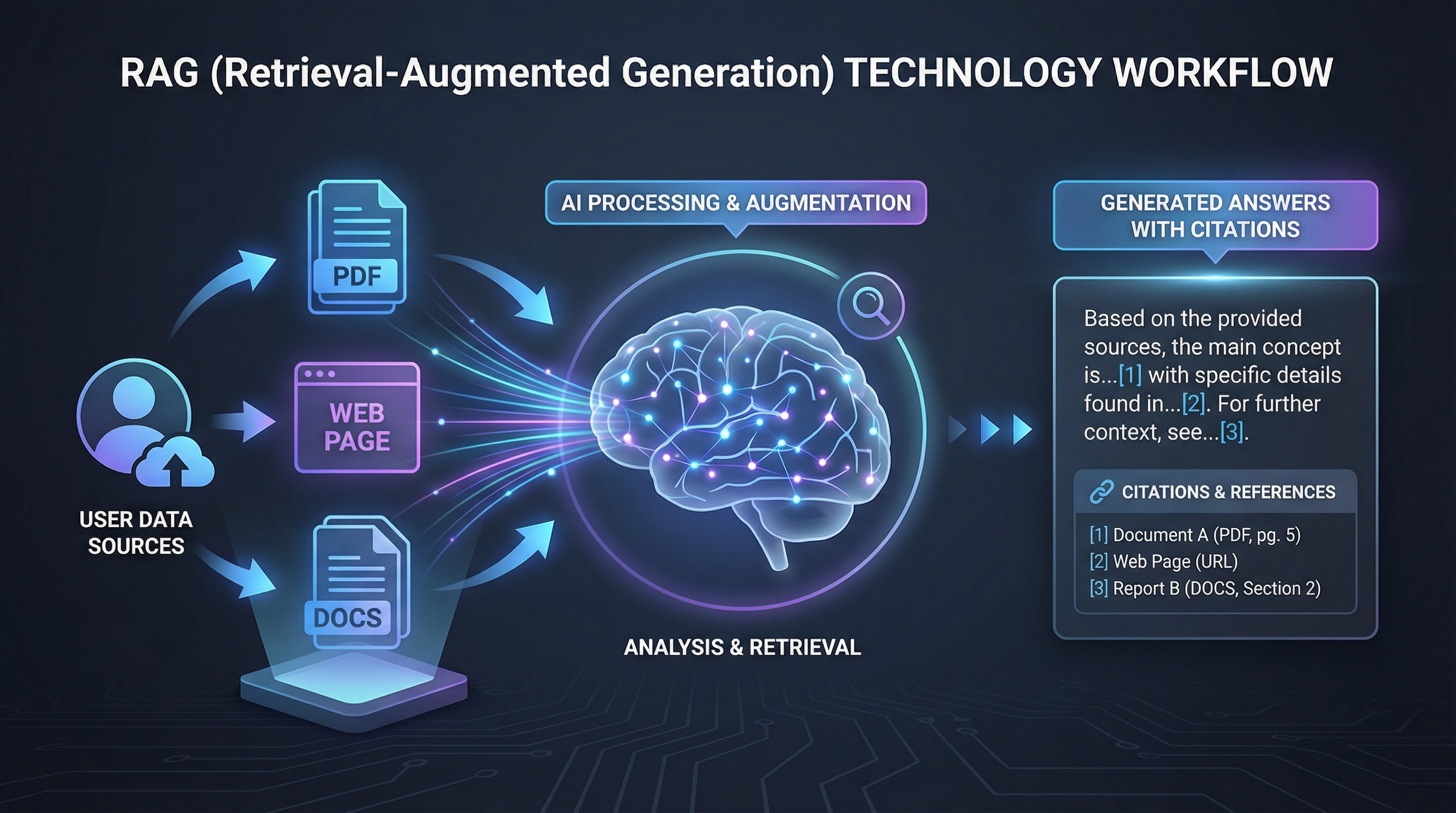
NotebookLM is a tool for AI to understand the contents and make summaries and questions and answers based on PDFs, websites, Google Docs, YouTube videos, audio files, etc. uploaded by oneself. The biggest characteristic is that it uses a technology called retrieval-augmented generation (RAG). RAG is a mechanism that refers only to reliable sources of information provided by users, rather than uncertain information on the internet when AI generates an answer. Thus, “hallucination (hallucination)” where AI tells plausible lies is drastically reduced, and highly reliable answers with the quoted source clearly stated can be generated.
NotebookLM underwent a major update in 2025/10. Equipped with the latest Gemini model, the context window was increased 8 times to 1 million tokens, and the conversation memory was expanded 6 times. Thus, a larger amount of information can be processed at once, and long-term dialogue maintaining context is possible. Furthermore, a “custom goal function” that can customize the AI response style in the form of “I want you to do a strict analysis like a doctoral student” has also been added.
As a main function enhancement, the context window was expanded 8 times to reach 1 million tokens, and the conversation memory was also expanded 6 times. Response quality has been improved by 50%, and it is now possible to handle up to 300 sources (600 with an Ultra subscription).
Gemini - Multimodal AI that understands everything
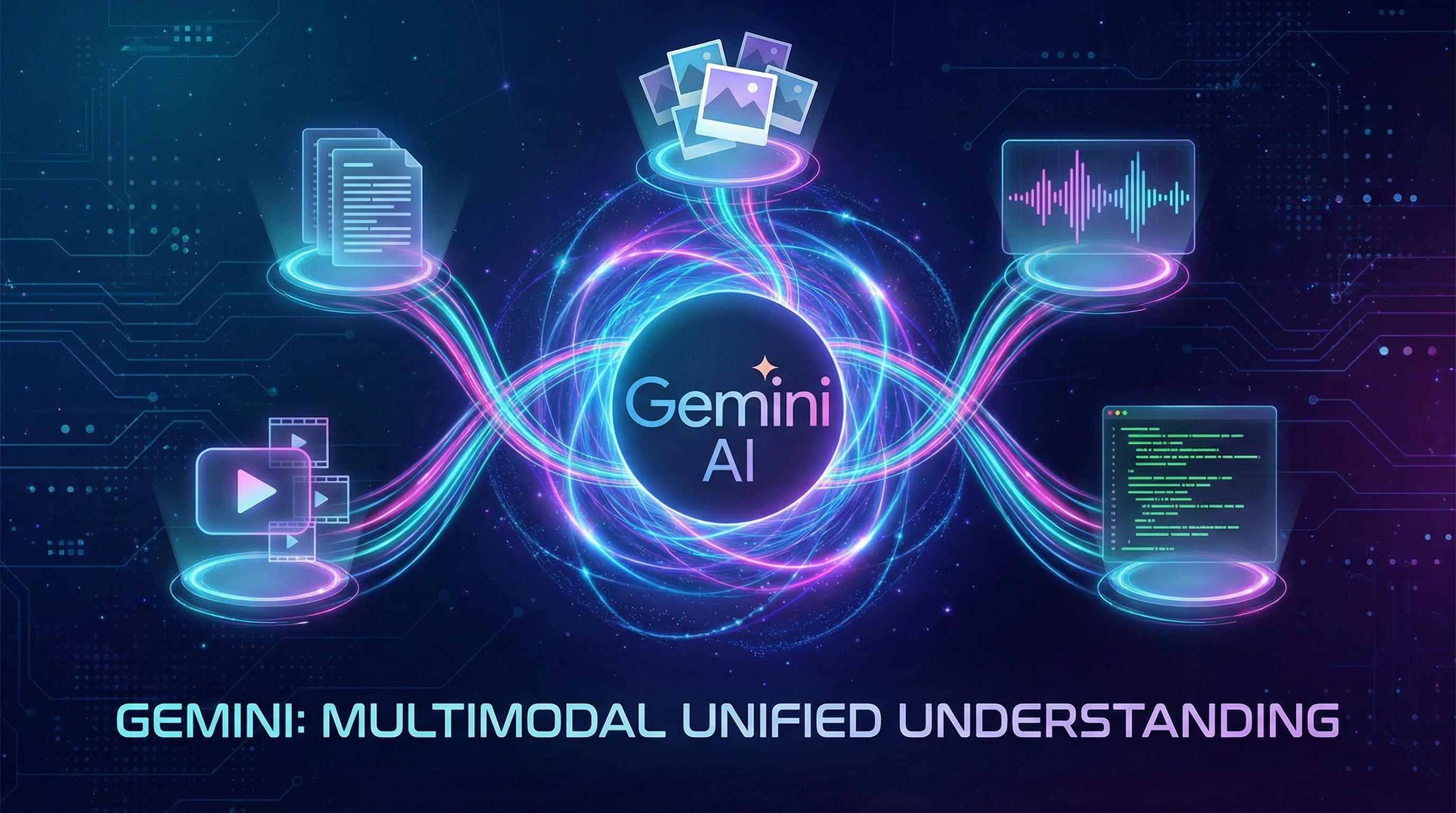
Gemini, on the other hand, is the most high-performance AI model developed by Google, and features a “native multimodal” design that can comprehensively understand various information such as text, images, audio, video, and code. They are good not only at single tasks, but also at complex reasoning and problem solving by combining multiple pieces of information. Gemini is available in three sizes, “Ultra,” “Pro,” and “Nano,” depending on performance, and operates efficiently in a wide range of environments, from data centers to smartphones.
What will change with integration
The integration between NotebookLM and Gemini is more than just adding functionality. It has the potential to change the very way we interact with AI. Until now, interaction within NotebookLM has been limited to information within uploaded sources. However, with this integration, it is now possible to reference one's own NotebookLM notebook as an “external memory” while utilizing Gemini's extensive knowledge and web search capabilities.

“This is really great. This is because I can now ask AI to create games, interactive apps, and simulations using the context of my notebook.”
The biggest advantage of this integration is the dramatic expansion of context. By attaching a notebook containing up to 300 sources (600 in the Ultra plan) to Gemini dialogues, it is possible to provide vast expertise and personal background information to AI. Thus, it is possible to request advanced tasks from Gemini, such as having deep discussions on specific topics, preparing specialized documents, and receiving personalized guidance based on one's own learning history, without the trouble of re-uploading the source each time.
How should I actually use it
This integration can be used concretely in various fields. For example, a tech writer is putting this “dream combo” into practice in the process of learning about self-hosting.
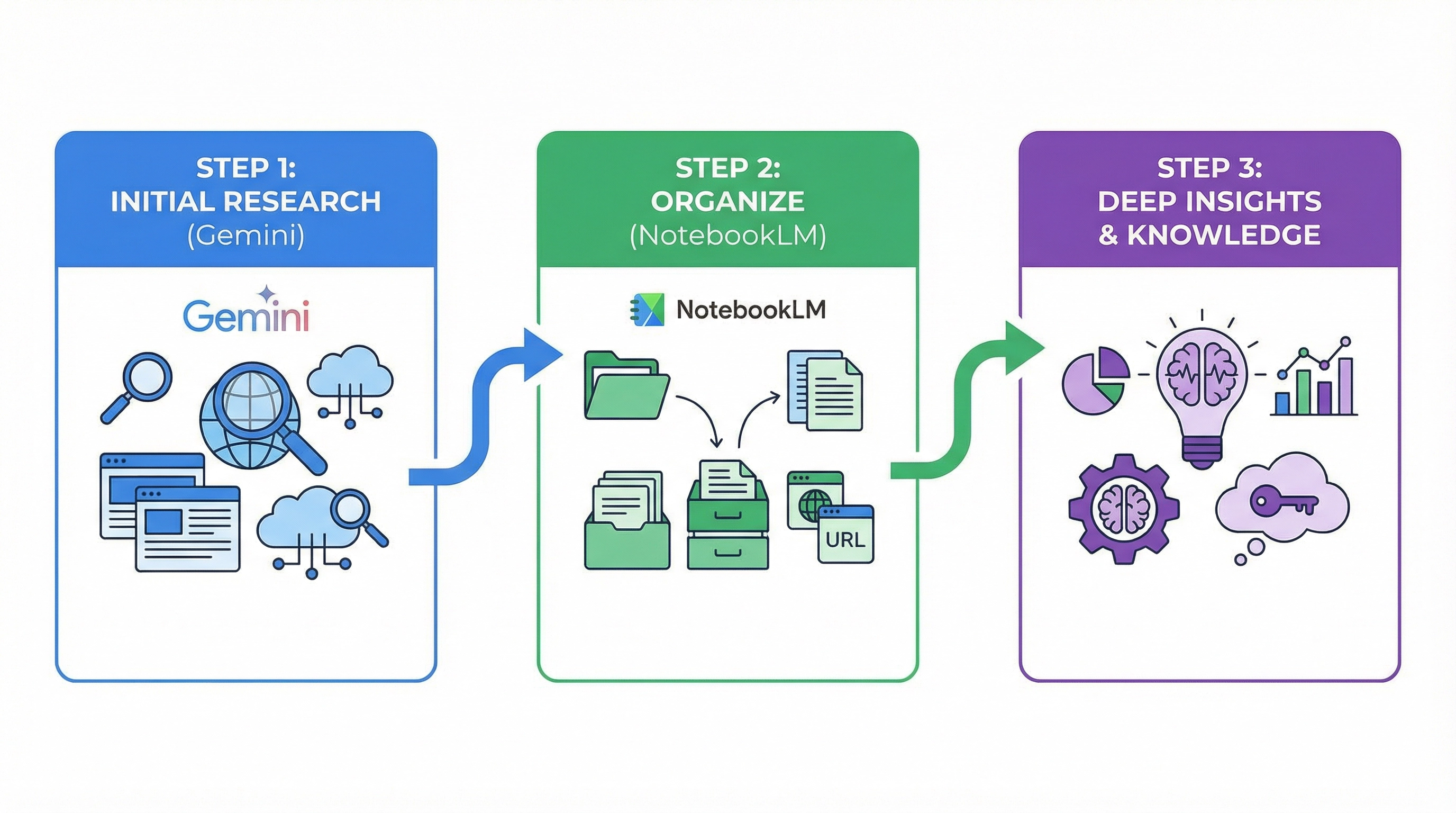
First, in step 1, initial research is carried out in Gemini. Ask Gemini to generate a summary of “The Basics of Self-Hosting,” including URLs from reliable sources. Next, as step 2, it is aggregated into NotebookLM. Generated text and URLs, and YouTube explanatory videos and own memos are aggregated into NotebookLM, and a single knowledge hub is built. Finally, in step 3, you'll gain deep insight. On NotebookLM, “What are the points where beginners are more likely to fail at first?” Ask advanced questions such as, and get answers that cross all sources.
Thus, by combining Gemini's “broad knowledge” with NotebookLM's “deep knowledge,” the efficiency of learning and research can be dramatically improved. Furthermore, by using the “Audio Overview” function of NotebookLM, it is possible to generate podcasts where AI explains aggregated knowledge in an interactive format, and time such as while on the move can be effectively utilized.
How do you use NotebookLM and Gemini properly?
Google has clearly defined each role for “NotebookLM Enterprise” and “Gemini Enterprise” for enterprises. This proper usage is also helpful for general users.
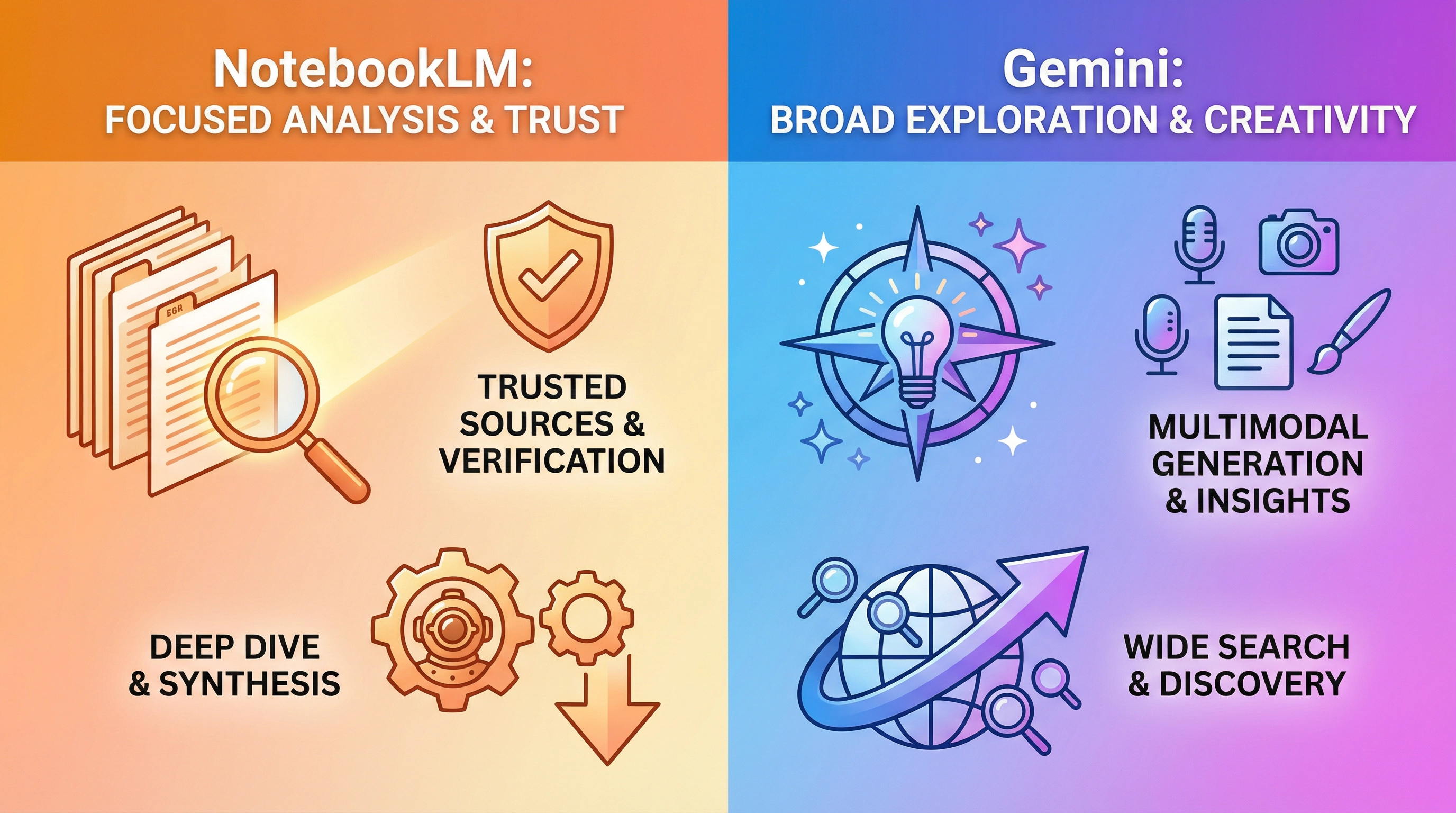
NotebookLM excels at aggregating and analyzing knowledge based on reliable sources. Specific documents and URLs provided by oneself are received as input, and summaries, FAQs, and questions and answers limited to sources are output. Perfect for when you want to know more about a specific project.
Meanwhile, Gemini excels at extensive information retrieval, diverse content generation, and autonomous task execution. It receives a wide range of queries and enterprise-wide data as input, and outputs answers and multimodal content from various data sources. It's perfect for when you don't know what to look for, or when you want to come up with creative ideas.
Basically, it's effective to use Gemini for extensive exploration and creative tasks, and NotebookLM for rigorous analysis and document creation based on specific sources. And this integration seamlessly links these two tools so that each other's strengths can be brought out to the fullest.
Collaboration with AI is moving to the next stage
The integration of NotebookLM and Gemini is an important step in evolving AI from a simple “question and answer system” to a “true partner” that understands each person's knowledge and context and expands their thinking. The combination of reliability guaranteed by RAG technology and Gemini's strong reasoning ability has the potential to dramatically improve the productivity of all knowledge workers, such as researchers, students, and business people.
This function is currently being rolled out in stages, and it is planned that all users will soon be able to use it. Now that collaboration with AI is moving to the next stage, how to utilize this “dream combo” will be the key to influencing future intellectual productivity.
Bibliography
•Reddit - Google is rolling out a NotebookLM integration for Gemini
•Google NotebookLM | AI Research Tool & Thinking Partner
•NVIDIA Blogs - What Is Retrieval-Augmented Generation aka RAG
•Google - NotebookLM adds custom goals, improved performance
•Google - Designing Gemini: Our largest and most popular AI model
•Android Police - I started using NotebookLM with Gemini and it's a dream combo to work with
•Google Cloud - NotebookLM Enterprise, Gemini Enterprise, or both?